
How to lose £9,000 without even asking
Why timing is everything. And when it pays to ask for more.
- Written by
- Anthony Clay
- Added
- May 21, 2012
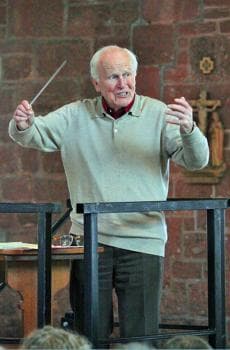
You will most likely not know it, dear SOFII reader, but I have been singing in choirs since I was a small boy. I was a chorister at the age of 10, or less (I know that the thought of me in this role, for those who know me, will be too horrible to contemplate, but that’s what I was and my dear old granny, bless her, loved it). I have also long been a great fan of Sir David Willcocks (he of The Cambridge King’s College Festival of Nine Lessons and Carols at Christmastide). Believe it, or not, this great performer is now a smidge short of age 90. For over 30 years he has conducted virtuoso performances of Handel’s Messiah ‘from scratch’ at the Royal Albert Hall, to sell out audiences. Choirs and individual singers come from all over the world for this. To sing it with 3,500 other people (some even in tune) and another 2,000 in the audience is a serious experience – not necessarily an example of musical finesse but pretty amazing, without doubt.
The benefiting charity for this event (for some reason not clear to me) has always been the British Heart Foundation. This is a charity that for many years had a major general as CEO who thought that fundraising was, at best, an evil necessity. He once told me, when I was trying to move BHF fundraising into the nineteenth – let alone twentieth – century, that his job each autumn was to add up all the legacies they had received that year and decide which research projects they should fund with them the next year. Job done. Nobody had to fundraise at all. So, bugger off Mr Clay – I paraphrase, you understand. BHF of course is much more professional and accomplished at fundraising these days.
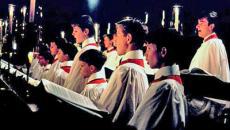
Anyway, one recent night at the Albert Hall, a now ancient me and my friends were singing away and having a lovely time, feeling vaguely that it was wonderful that a charity was benefiting also from our brilliant performance. Then, before we started the second half, a bloke from the BHF came on stage after the interval with the splendid idea that there should be an auction for the prize of conducting the assembled company, orchestra and soloists in the Hallelujah Chorus.
An auction; what a great idea! And of the once-in-a-lifetime chance to conduct the chorus. What could be better?
The top auctioneer from Christies, the famous London auction house, climbed onto the podium and bidding started. With over 5,000 people in the hall, in the round, so to speak, this was really rather difficult. So, with great aplomb (literally) the Christies man encouraged the audience to watch the opposite side of the auditorium and to yell out in best pantomime style, ‘It’s behind you!’, should they see some waving to make a bid. Bidding started at £500 and fairly soon rose to £8,000. Then, to my astonishment I suddenly felt as though half the people in the hall were shouting and pointing at me. Then I realised that the rather scruffy tenor singing next to me was waving his score at the auctioneer and bidding £8,500, ending at £9,000. The hammer was about to fall at this price, and my neighbour was fishing his chequebook and a conductor’s baton out of his brief case, when someone bid £10,000. This was too much for my neighbour, who put his baton away with a shrug.
There was then a hiatus whilst the successful bidder was asked to make his way to the podium. Then came the announcement that the winner wished to remain anonymous and was offering the conducting to the runner up. Out came my neighbour’s baton again and he duly conducted us in a spirited (if rather slow) rendering of ‘the Old Hallyloojar’, as it’s known in the trade.
When he returned to his seat I asked him whether, during the amazing high immediately after his performance anyone had asked if, since he had had the experience for which only 20 minutes earlier he had been prepared to pay £9,000, he might consider writing the cheque after all – thus raising a total from the event of £19,000 for their wonderful cause. He said no, nobody had asked him – he thought they were too embarrassed because they had already raised far more than ever before. They had only been expecting £8,000 at most. The fundraiser in me then made me ask whether he would consider doing this now anyway. He replied, ‘If they had asked me then I would have done it – but the moment is now passed.’
Oh dear. What a lost opportunity!
© Anthony Clay 2010