
How to reduce F2F attrition in the first 90 days
- Written by
- Charlie Hulme
- Added
- April 06, 2016
Does this look familiar to you?
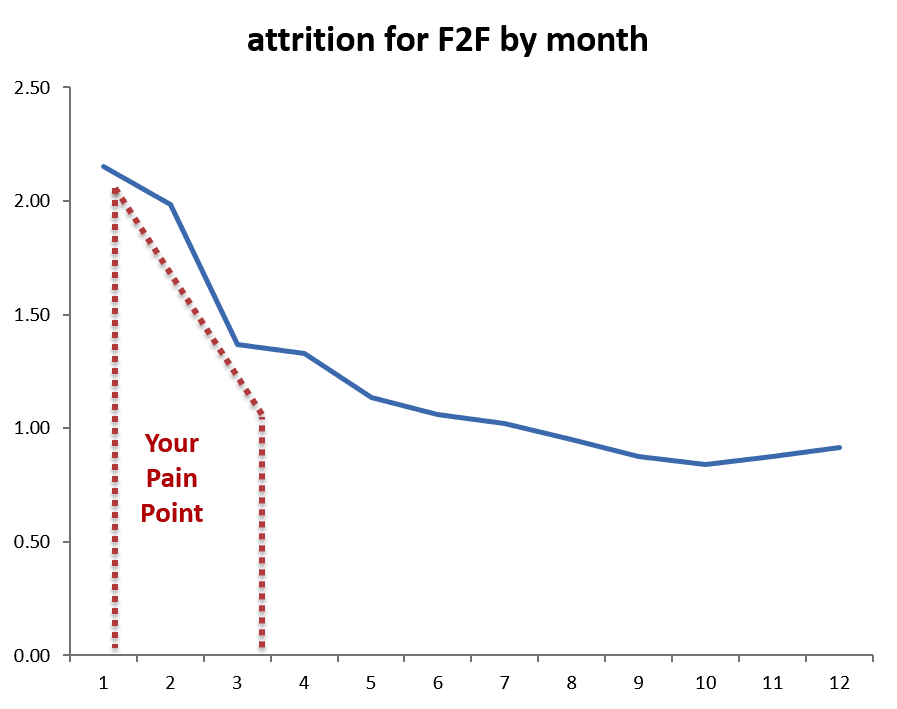
Have you spent a lot of money trying to fix it without seeing any improvement?
If, like everyone else, your answer is a resigned ‘yes’ don’t despair! Join other fundraisers on this webinar and learn about a near perfect predictor of who will leave in the first 30 days and know how to save them before they leave.
Co-hosted by DonorVoice, the Agitator and SOFII this session will be chock-full of ‘how-to’ and tactical specifics, along with case data that will have you clamouring to put this in place yesterday. You’ll learn:
- How to measure the quality of the street fundraising experience (from the donor’s perspective).
- How to do this within your existing process for F2F acquisition.
- How to measure the loyalty of those signing up.
- Data showing this loyalty measure (Commitment Score™) is a near perfect predictor of 30-day retention.
- Data showing that the Commitment Score™ combined with the quality of street fundraising experience measure are very good predictors of 90-day retention and far better than the specific campaign message.
- How to redefine what a good street fundraiser is and the training to go with it.
- How to aggregate donor open-end comments and feedback to identify global fixes or improvement areas in your F2F process
Everyone knows the face-to-face model is horribly broken. But it wasn’t always this way. SOFII’s Ken Burnett will provide an inspirational retrospective on the enormous early success of F2F. And he’ll point to what is possible, in our immediate future, if we just re-imagine the world by changing our mindset.
You’ll also hear from Roger Craver, editor of the Agitator, providing colour commentary and peppering you with questions to make sure you get maximum value from your session.
And if that isn’t enough Dr Kiki Koutmeridou, DonorVoice’s resident expert in behavioural science,
As a teaser: you’ll learn which slogan should be on your fundraising teams’ t-shirt to raise more money.
(Virtual) seating is limited for this first-come, first serve, exclusive event.
All you need to do now is click here to register - but don’t wait or you will miss out.